Liquid Funding

Zev Shalev has been talking and writing about Liquid Funding for a while. Since I cant read his written work (paywalled) I won’t comment on it. However, Craig Unger has jumped in on the topic

Before I get into it here is a bit of an introduction to Liquid Funding.
In 1988, while Epstein was still consulting for Hoffenberg, he founded his own financial management firm, J. Epstein & Company, The company was said by Epstein to have been formed to manage the assets of clients with more than US$1 billion in net worth
In 1996, Epstein changed the name of his firm to the Financial Trust Company and, for tax advantages, based it on the island of St. Thomas in the U.S. Virgin Islands. By relocating to the U.S. Virgin Islands, Epstein was able to reduce federal income taxes by 90 percent. The U.S. Virgin Islands acted as an offshore tax haven, while at the same time offering the advantages of being part of the United States banking system.
Epstein became the Chairman of the company Liquid Funding Ltd he helped set up in 2000 until he resigned in 2007. Liquid Funding was a highly leveraged offshore investment vehicle (SIV) tied to Jeffrey Epstein, Bear Stearns, and JPMorgan that operated in a regulatory gray zone designed to avoid oversight, taxes, and transparency
Appleby was Liquid Funding’s offshore law firm, responsible for creating the vehicle, structuring its governance, maintaining its legal existence, and issuing the legal opinions that allowed its securities to be sold. They did not manage assets or risk. They defined the non-executive nature of the chairman role and ensured Liquid Funding remained legally separate from Bear Stearns, which was essential to the SIV model
Bear Stearns Bank plc (Dublin), an affiliate of Bear Stearns was the Investment manager with operational control over investments. In effect they were management and assumed financial risk
Bear Stearns -NY was the sponsor and provided liquidity facilities, structured the vehicle, made markets in its liabilities and bore reputational risk. Its motivation was to move dodgy assets off its balance sheets
JPMorgan Chase was Security Trustee for Liquid Funding Ltd.. That means JPMorgan had a trustee role responsible for holding and administering certain collateral or security interests related to Liquid Funding’s financial arrangements
As non-Executive Chairman Epstein worked with Bear Stearns Management and Investors and gained legitimacy on Wall Street . He presided over board meetings (if any), representing the entity externally, and facilitated relationships , especially credit agencies, but he was not management.
The company was an early pioneer in expanding the kind of debt that could be accepted on repurchase, or the repo market, which involves a lender giving money to a borrower in exchange for securities that the borrower then agrees to buy back at an agreed-upon later time and price.
The innovation of Liquid Funding, and other early companies, was that instead of having stocks and bonds as the underlying securities, it had commercial mortgages and investment-grade residential mortgages bundled into complex securities as the underlying security. Its purchases of long term assets were financed with short term debt (liabilities) using the assets as collateral
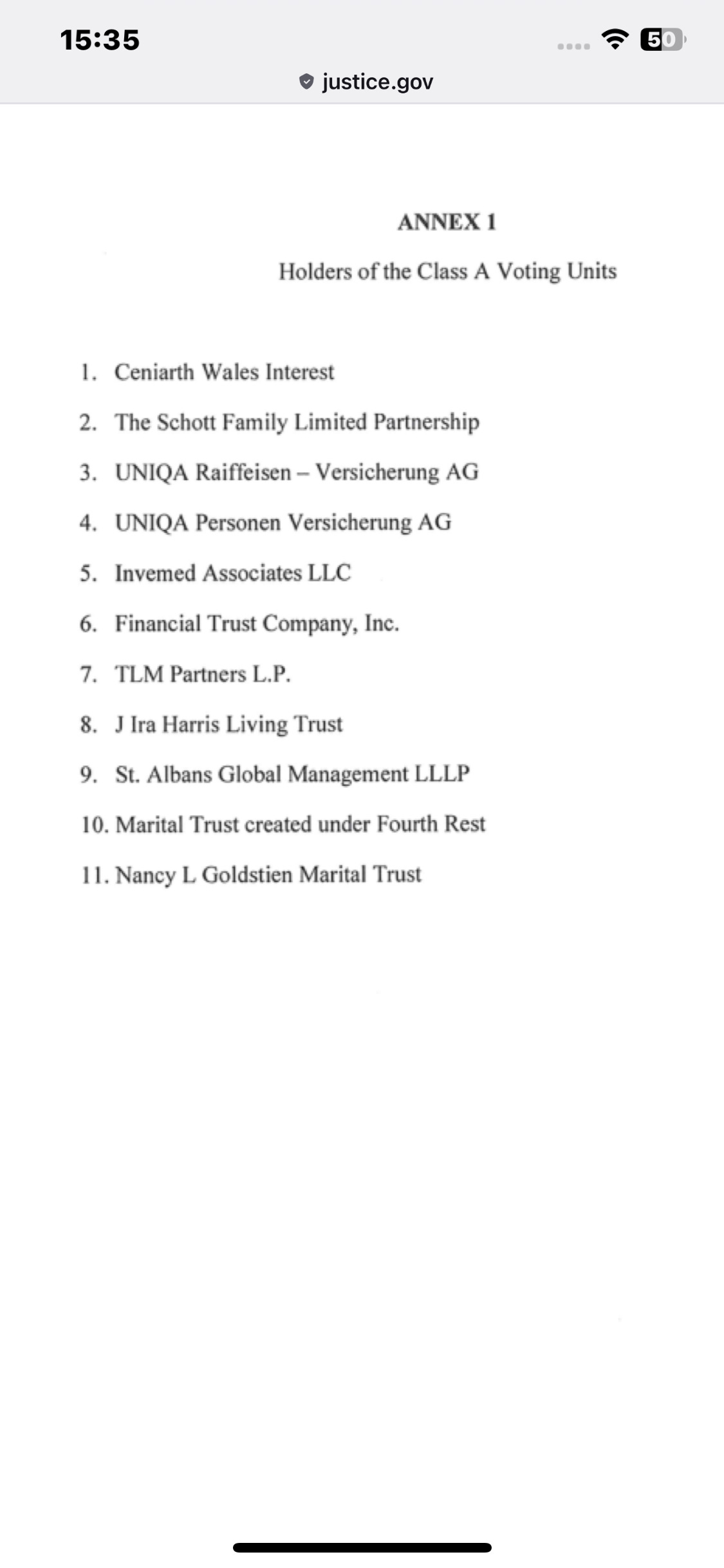
Bear Stearns had a 40% financial interest in Liquid Funding. The rest of equity was provided by Trusts, including Epstein’s Financial Trust which was 1 of 11 holders of Class A Voting units
In an SPV like Liquid Funding, the structure typically breaks down into three layers of “interest,” and Bear Stearns’ 40% likely lived in the latter two:
• Legal Ownership (The “Orphan” Structure): To ensure the entity was “bankruptcy-remote,” the actual voting shares were likely held by an Orphan Trust (often a purpose trust managed by a firm like Appleby). This prevents Liquid Funding from being consolidated onto Bear Stearns’ balance sheet, protecting the bank’s credit rating. Epsteins Financial Trust was 1 of 11 Orphans
• Economic Exposure (The “40%”): The 40% figure most likely refers to First-Loss Equity or Junior Tranche exposure. Bear Stearns (via Bear Stearns Bank plc in Ireland) likely provided a portion of the “credit enhancement.” This means they were the first to take a hit if the mortgages defaulted, effectively “owning” the risk of the first 40% of losses in exchange for high returns.
• Capital Support Obligations: As a Repo vehicle, Liquid Funding needed a “liquidity backstop.” Bear Stearns likely provided a standby line of credit. In accounting terms, this “commitment” can be represented as an equity-like interest because it is the capital that supports the entire debt structure.
Through the help of the credit rating agencies - Standard & Poor’s, Fitch Ratings and Moody’s Investors Service - the new bundled securities were able to be created for companies so that they got a gold-plated AAA rating.
The implosion of such complex securities, because of their inaccurate ratings, led to the collapse of Bear Stearns in March 2008 and set in motion the financial crisis of 2007-2008 and the subsequent Great Recession. If Liquid Funding were left holding large amounts of such securities as collateral, it could have lost large amounts of money,
As its assets dropped in value it had to make up the deficit in collateral and reduce its $6.7 billion in liabilities
End Introduction
They (Zev and Unger) seem to attach great importance to Liquid Fundings role in the collapse of Bear Stearns and the cost to taxpayers to bail “Epsteins” company out and somehow buying out their liabilities.
Here is a TL;DR from ChatGBT on Ungers piece
TL;DR:
Liquid Funding was a highly leveraged offshore investment vehicle tied to Jeffrey Epstein, Bear Stearns, and JPMorgan that operated in a regulatory gray zone designed to avoid oversight, taxes, and transparency. Epstein likely owned a major stake and chaired the company, which issued billions in securities backed by risky subprime mortgage assets while having only a tiny amount of real equity. Thanks to offshore structures, weak governance, friendly ratings agencies, and backing from major banks, Liquid Funding was allowed to take on extreme leverage—hundreds of dollars in securities for every dollar actually invested.
When the subprime mortgage market collapsed in 2007–2008, Liquid Funding was left with $6.7 billion in liabilities. Bear Stearns minimized its own exposure and collapsed shortly after. During Bear’s emergency rescue, the Federal Reserve created Maiden Lane LLC to absorb Bear’s toxic assets so JPMorgan would acquire it. Although never publicly disclosed, evidence strongly suggests Liquid Funding’s liabilities were quietly paid off during this bailout process—meaning U.S. taxpayers likely covered the losses.
Meanwhile, Epstein had deep relationships with JPMorgan, which flagged suspicious activity in his accounts but failed to timely report it to regulators. Epstein resigned from Liquid Funding just as prosecutors were preparing a major indictment against him. In short: an opaque offshore vehicle tied to Epstein was massively leveraged, collapsed in the financial crisis, and appears to have been silently bailed out by the Fed—while Epstein himself avoided scrutiny and accountability during the same period he was committing serious crimes.
Sounds nasty but there are a few problems.
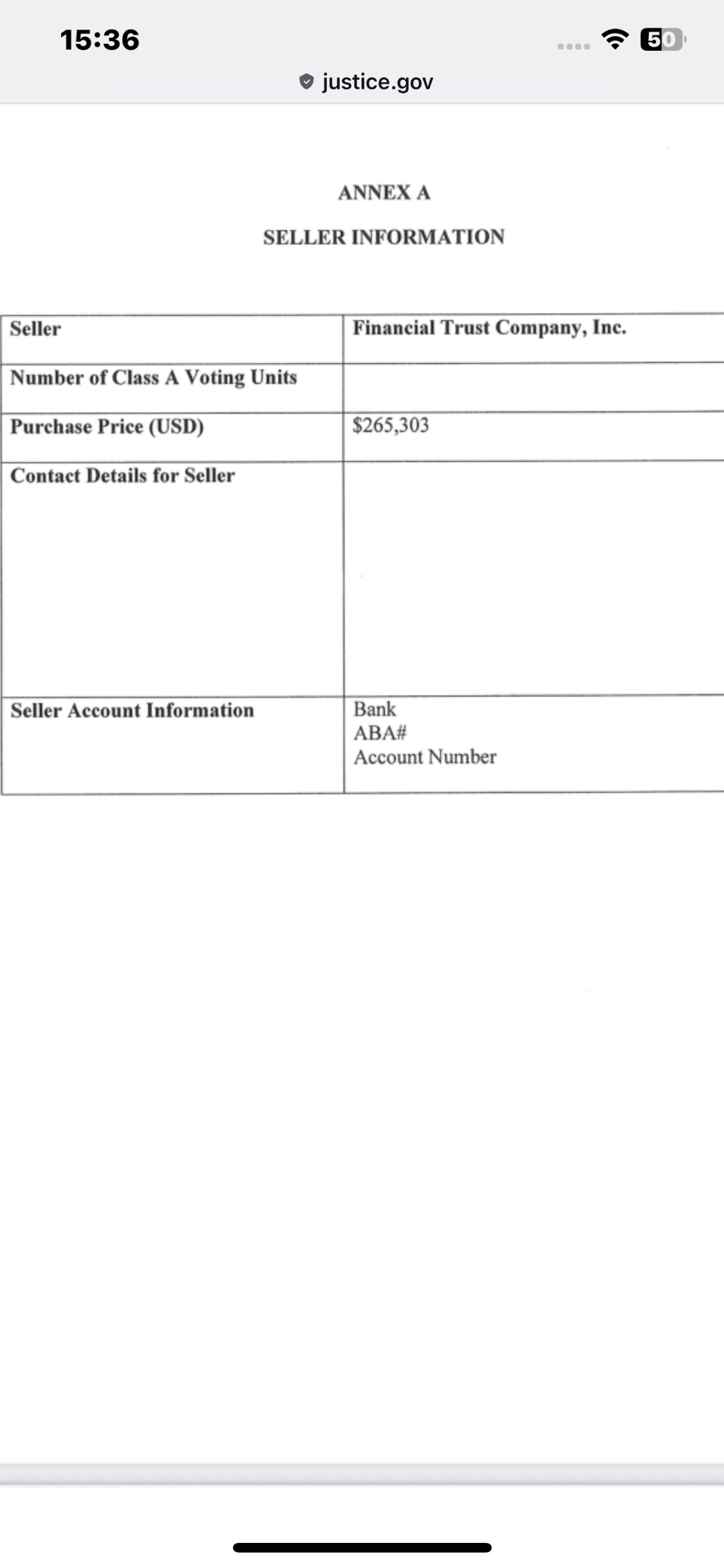
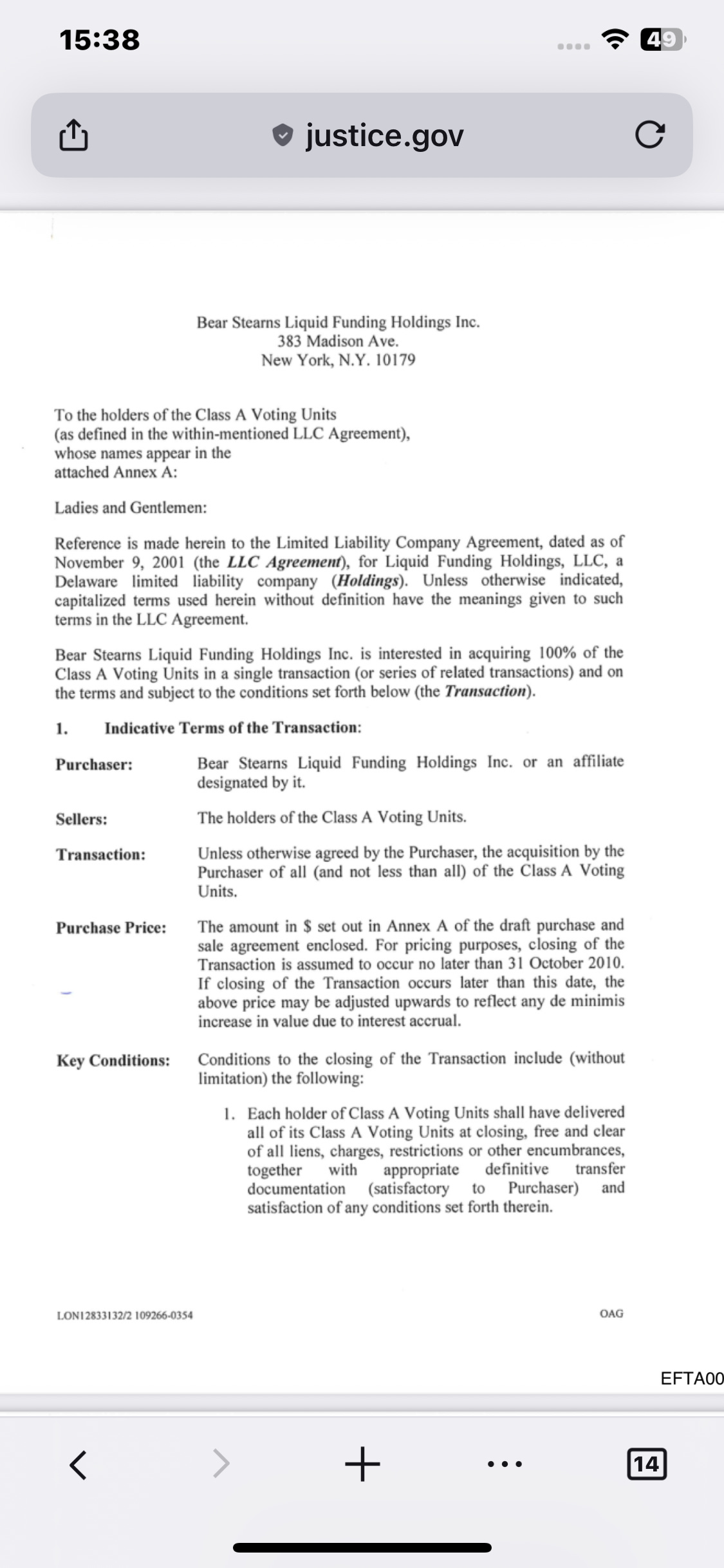
There is no evidence Epstein had a significant ownership stake in Liquid Funding. In fact in the recent dump of Epstein Files we see he sold his voting rights to Bear Stearns(JP Morgan ) in March 2011 for $265,303. Obviously this does not tell us the value of his initial investment in 2001.
Epstein was a non-executive Chairman. He had no role in operations. He did not control investment decisions. The Investment Manager was Bear Stearns-Dublin. At most Epstein handled investors and communicated with Bear Stearns management.
Tax payers did not fund anything related to Bear Stearns or Liquid Funding.Since Bear Stearns was a non-bank the Fed could not bail it out directly. The Maiden Lane Facility was created from money the Fed Created out of thin air and went to JP Morgan, which used it to buy out Bear Stearns at a fraction of its true value. JP Morgan then chose which of Bear Stearns toxic assets to unload to the Feds Maiden Lane Facility. While taxpayers assumed some risk, in the end the Maiden Lane Facilities turned a profit for the Fed. According to financial reports and filings from the period, JPMorgan Chase was a Security Trustee for Liquid Funding Ltd. before the Bear Stearns acquisition. That means JPMorgan had a trustee role responsible for holding and administering collateral or security interests related to Liquid Funding’s financial operations — separate from any acquisition conditions. This is all oversimplified for brevity
Epsteins resignation as Chairman of Liquid Funding in March 2007 may well have been linked to his arrest and pending prosecution due to reputations harm to Liquid Funding/Bear Stearns and being unable to perform his limited role as Chairman. It occurred before Bear Stearns collapse.
Liquid Funding did not cause Bear Stearns collapse, although it contributed . Its liabilities of $6.7 billion were dwarfed by those of Bear Stearns $400 billion balance sheet. What caused the crisis was Basel II Mark to Market requirements that was created by BIS . Basel II forced banks to value many assets at current market prices and tie capital requirements to those values. When markets froze in 2007–08, paper losses instantly became capital losses, forcing asset sales, margin calls, and deleveraging—deepening the crash. Basel II didn’t light the match—but it ensured the fire spread fast and everywhere at once. So basically the match was lit with the Fed increasing interest rates to combat inflation caused by high oil prices (thanks in part to speculators at JP Morgans Futures Trading Desk) and subprime housing bubble that deflated due to the higher rates, popping the CDO Bubble.*
*Note-I wont get into it in this post but there is a plausible case to be made that the Great Financial Crisis was orchestrated by BIS, Fed, and Wall Street Banks by unleashing derivatives, creating the housing bubble with subprime loans, inflating oil prices through financial speculation , and then raising interest rates despite relatively low core inflation which popped the housing bubble and led to the market collapse while Goldman Sachs (Henry Paulson) and Deutsche Bank had bet against sub-primes. JP Morgan got Bear Stearns at 20 cents on the dollar . Immediately thereafter, Bitcoin was rolled out by some anonymous (NSA?) Satoshi dude. Who knows, maybe Epstein was the mastermind. Maybe he was even Satoshi?
Bigger Picture
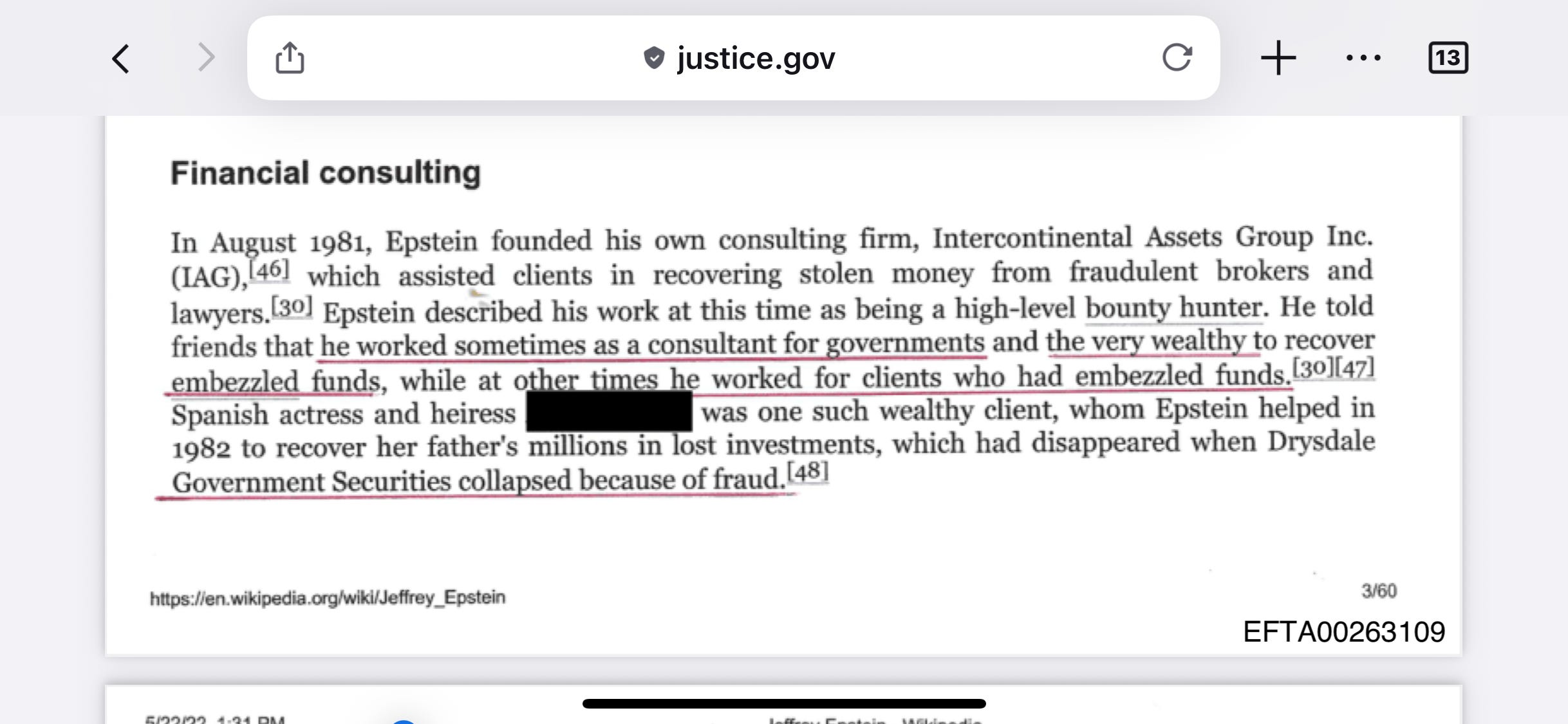
We know Epstein was an expert on hiding money and finding it . This going back to the 1980’s and his arms dealing days hanging out with guys like Douglas Leese and Adnon Khashoggi. He referred to himself as a bounty hunter. Spanish actress and heiress Ana Obregón was one such wealthy client. In 1982 Epstein helped her recover her father’s millions in lost investments, which had disappeared when Drysdale Government Securities collapsed because of fraud . Where he learned the ins and outs of the “Treasure Islands”, which are offshore tax havens, I cant say . But his knowledge of this world allowed him to set up legal enterprises like Liquid Funding and others that might be more secret and less legal.
BTW-can you believe they redacted Ana Obregón name from Epsteins wikipedia page that was released in the Epstein Files😂
There is what is known as the Offshore Magic Circle, which refers to the interconnected roles of top-tier professional service firms that design, implement, and defend the complex structures used to hide wealth, avoid taxes, and circumvent laws.
These firms are the architects behind the complex structures used by multinational corporations and ultra-high-net-worth individuals. While Elite Banks, Law Firms, Accounting Firms and Wealth Managers are important members of the Circle these on site Service Providers are key.
• Appleby: Historically the most high-profile member, especially after the 2017 Paradise Papers leak. It was Appleby that served as the registered agent and legal counsel for Liquid Funding, Ltd. Epstein began doing business with them in 1997. In 1996 J. Epstein & Co. redomiciled to the U.S. Virgin Islands and was renamed Financial Trust Company Inc
• Maples Group (formerly Maples and Calder): Based in the Cayman Islands, it is arguably the largest and most influential offshore firm globally.
• Carey Olsen: A dominant force in the Channel Islands (Jersey and Guernsey) with a significant presence in the Caribbean.
• Conyers (Conyers Dill & Pearman): The preeminent Bermuda-based firm, known for its deep ties to the island’s insurance and shipping sectors.
• Ogier: A major player across the Channel Islands, BVI, and Cayman, known for its focus on investment funds.
• Mourant: Another leader in the Channel Islands and Caribbean legal space.
How They Function
The Offshore Magic Circle firms don’t just “hide” money; they create the legal plumbing that allows global capital to move efficiently. Their work typically falls into three categories:
1. Tax Neutrality: They set up structures (like SPVs or “Special Purpose Vehicles”) so that investors from different countries aren’t taxed twice on the same profits.
2. Asset Protection: They create trusts and foundations that are incredibly difficult for creditors or ex-spouses to penetrate.
3. Regulatory Arbitrage: They help companies operate in jurisdictions with sophisticated but “flexible” legal frameworks, allowing for higher leverage or less transparency than “onshore” jurisdictions like the US or UK might permit.
The “Paradise Papers” Connection
The Offshore Magic Circle became a household name in 2017 when a massive data breach from Appleby exposed how the global elite—from the Queen of England to major tech companies like Apple—used these firms.
• The Difference from Panama: Unlike the “Panama Papers” (which focused on the firm Mossack Fonseca), the Appleby leak (Paradise Papers) showed that the Offshore Magic Circle deals with the “cleaner” side of the offshore world—legitimate, if controversial, tax avoidance and high-level corporate finance.
• Liquid Funding’s Role: The records showed that firms like Appleby didn’t just provide a mailbox; they provided the directors, compliance officers, and legal frameworks that allowed entities like Jeffrey Epstein’s Liquid Funding to exist as “AAA-rated” vehicles despite their underlying risks.
Comparison: Onshore vs. Offshore Magic Circle
As Chairman of Liquid Funding, Ltd., Jeffrey Epstein occupied a role that was more about structural influence and high-level networking than the day-to-day “number crunching” typically associated with fund management.
Based on the information available through the Paradise Papers and subsequent investigations, his actions in this role can be categorized into three main areas:
1. Architect of the Structure
Epstein used his role to help design the “legal plumbing” of the company. Liquid Funding wasn’t a traditional bank; it was a Special Purpose Vehicle (SPV).
• The “Repo” Model: He oversaw a strategy where the company borrowed short-term money (at low interest rates) to buy long-term, higher-yielding assets like mortgages.
• Offshore Management: He facilitated the relationship with the “Offshore Magic Circle” firm Appleby in Bermuda. This allowed the entity to operate in a tax-neutral environment while maintaining a complex web of ownership that included Bear Stearns.
2. “Liaison” to the AAA Rating Agencies
One of the most critical things Epstein did as Chairman was ensuring the company’s products received AAA ratings from agencies like Moody’s and S&P.
• Because Epstein was the Chairman of a vehicle partially backed by a major Wall Street bank (Bear Stearns), he was able to present Liquid Funding as a safe, “investment-grade” entity.
• These top-tier ratings were essential because they allowed the company to attract conservative institutional investors who otherwise wouldn’t have touched the subprime-backed securities the company was actually holding.
3. Strategic Networking and “Greasing the Wheels”
Epstein’s primary value to the entity—and the reason Bear Stearns partnered with him—was his ability to move between the worlds of politics and high finance.
• Client Development: He acted as a bridge, connecting billionaires and political figures with the complex financial products managed by Bear Stearns.
• Legacy Connections: Despite having left Bear Stearns years earlier, he maintained close ties with its top leadership (including Jimmy Cayne and Alan Greenberg), using those relationships to maintain Liquid Funding’s legitimacy even as the underlying mortgage market began to weaken.
Key Performance Summary (2000–2007)
Note on context: While Epstein’s role as Chairman gave him a “badge of legitimacy” on Wall Street, investigators have noted that much of his financial success came from providing “tax and estate services” to billionaires, rather than traditional investment returns
Public reporting — including Paradise Papers analysis and press investigations — paints a consistent picture that Epstein used a mix of offshore law firms (Appleby), registered offshore vehicles (Liquid Funding), onshore investment managers and trustees (Bear Stearns, JPMorgan roles), and large banks (Deutsche Bank, JPMorgan) to hide assets and move money
Conspiracy Theory Alert. I believe Epstein may have had access to many tens if not hundreds of billions in offshore accounts for himself and his clients that was exposed during the Trump Administration by offshore service providers “like” Appleby (not accusing Appleby). Perhaps Epstein was arrested so “they” could access those accounts. Epsteins death may have been faked so he could be taken away to unlock these accounts, perhaps after a bit of persuasion😳. The 25 secret settlements may have been paid from these accounts, and not all of it went to the victims and their lawyers. You will have to figure out who “they” were yourself.
What happened to Epstein after he unlocked the accounts? Good question.
End
Scapegoats everywhere. I wish everyone searched for the truth like you. Unfortunately, “It is difficult to get a man to understand something, when his interest depends on his not understanding it.”